
Charles County's Most Wanted Program
When people in Charles County mention most wanted, they usually mean the anonymous tip-and-reward service tied to the Sheriff's Office. Crime Solvers is a citizen-run organization, not a courthouse arm. Its whole purpose is gathering information. The Crime Solvers program page is the official place to start if you have something to report.
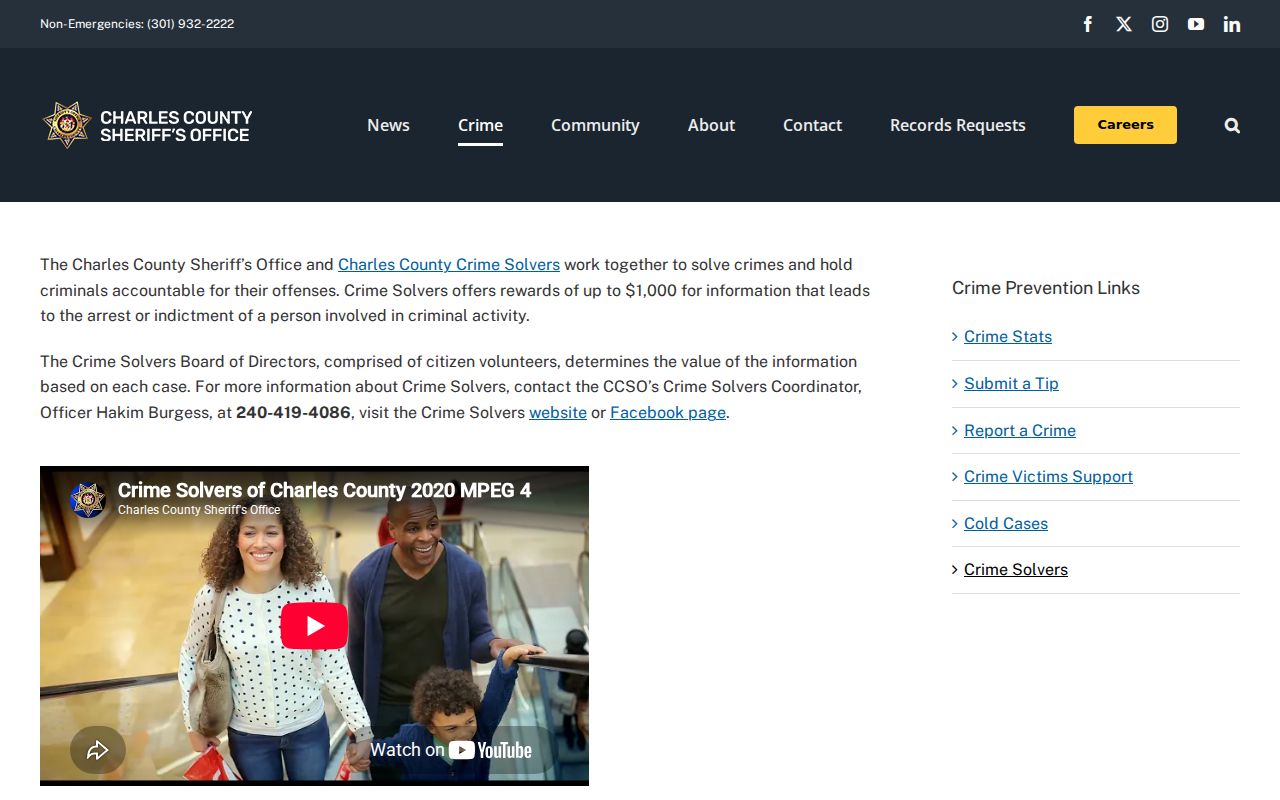
The Charles County program's pages explain how a tip works and what rewards can reach. No names appear there.
No Charles County Most Wanted Roster Online
Go looking for a Charles County most wanted list and you'll find program pages, not people. The sheriff posts no roster, no photo gallery, and no refresh schedule on its contact, divisions, transparency, detention, Crime Solvers, or news pages. What the county publishes instead is case news.
Key Point: Crime Solvers is an anonymous tip and reward program run with the Sheriff's Office, not a public list of the people being sought.
Tips go to 866-411-TIPS or the encrypted web route the program links.
That gap is the honest answer. Charles County shares news when a warrant is served, and it keeps no standing list of who is wanted.
How the Most Wanted Lists Work
Where a sheriff does publish a curated list, it is a small slice of a much larger set of open warrants. The office picks which cases to publicize. Severity of the charge matters. So does whether public attention is likely to help. In Charles County, as anywhere, that curation has limits worth spelling out. A curated list is never the full active-warrant picture, so a person missing from it may still have an outstanding warrant. And nobody comes off such a list on a schedule, because no schedule is published. Anyone who wants a real answer on a warrant has to ask the issuing court, not a list.
Note: a list is a request for information, not a status report on anyone named in it.
How Charles County Most Wanted Rewards Work
Crime Solvers rewards come from the program, not from a court in Charles County. The published ceiling is $1,000, and that figure is a maximum rather than a promise. A citizen board decides what a tip was worth. It can pay less. What the program wants is information leading to an arrest or an indictment. Anonymity does not block a follow-up. A caller who leaves a way to be reached may hear back about the payment.
Reporting a Tip Safely
A tip about a case is not the same as a warrant check, and the Charles County program keeps the reporting person out of the process.
- Use the published tip phone number or the encrypted web form rather than a social media message
- Describe what you know and when you saw it, and leave out details you cannot support
- Keep any reference number the system gives you
- Do not approach anyone you believe is named in a case, and do not send someone else to do it
- Call 911 instead of a tip line when someone is in immediate danger
Anonymous does not mean informal. A reference number lets a caller add details later in Charles County without starting over.
Charles County Most Wanted and Task Forces
Chasing a fugitive sometimes pulls in federal help, not just Charles County officers. The regional partnership that covers Maryland is the Capital Area Regional Fugitive Task Force, a U.S. Marshals program. Its partner list runs long. The task force page spells out who joins and how the unit works.
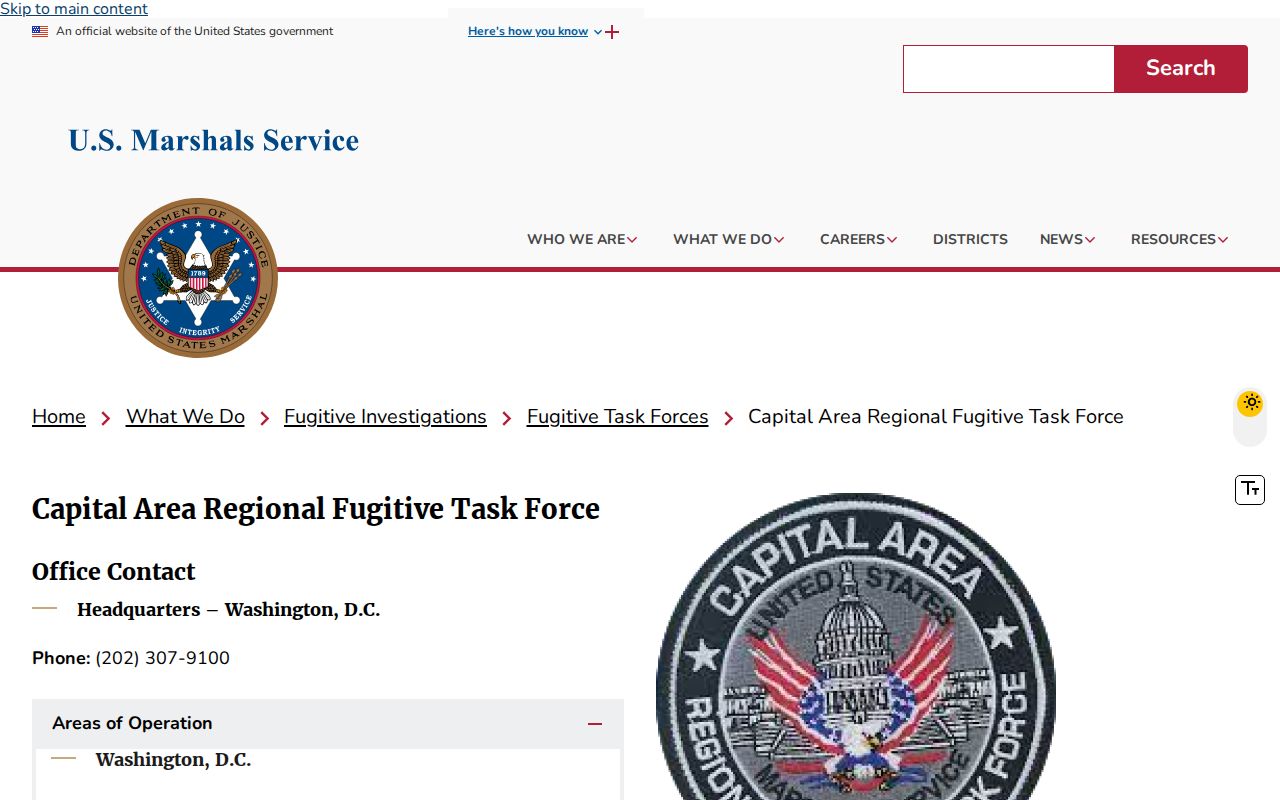
Which cases get task force attention is decided one at a time. Nothing about that work creates a public list, and joining it never puts a name on any Charles County page.
Most Wanted Lists vs Active Warrants
People often treat these as the same thing. They are not, and the difference matters when you are the one checking a status in Charles County.
| Point | Most Wanted List | Warrant Record |
|---|---|---|
| What it is | A request for public information | A court order and its docket entries |
| Who decides what appears | The agency that publicizes the case | The court that issued the process |
| How complete it is | Selective by design | Complete for that case |
| How to confirm | Not applicable | The issuing clerk, then the sheriff for service |
A most wanted list is selective; a warrant record is not. One can never stand in for the other. For the full picture of open warrants, see the outstanding warrants page.
Charles County Most Wanted List Gaps
The program pages leave plenty unstated. Treat those gaps in Charles County as gaps, and do not fill them in yourself.
- No roster of names or photographs
- No update cadence or refresh schedule
- No rule describing how a cleared case comes off a list
- No published detail about how eligibility for a reward is decided
A gap is not an invitation to invent a list from somewhere else. It is a reason to call the Charles County court when the question is a specific case.
If You Think You Are on a List
A public appeal turns a legal problem into a public one. The useful step stays the same. Call the court that issued the warrant in Charles County.
Important: if you believe you are listed, speak with a Maryland attorney and the issuing court rather than contacting the program about your own case.
The court controls the warrant, not the list. Ask the Charles County court what it will tell the agency once the case is resolved. The Warrant/Fugitive Unit at 301-932-3065 can say whether the service record has been updated.
Charles County Tips Are Not Warrant Checks
A tip line and a warrant check answer different questions, so it pays to know which office owns which one. A tip passes along what you saw or heard. A warrant record shows what a Charles County court actually ordered. The tip line cannot tell you whether someone has an active warrant, and the court clerk cannot take an anonymous crime report. Route each question to the office that handles it. That split is the whole trick to a useful warrant search.
Why No Charles County Most Wanted Roster
Charles County has no most-wanted roster to browse here, and that is deliberate. A warrant is court process, not a public accusation, and a listed case could later end in a recall, a dismissal, or no charge at all. A hosted gallery of names and photos would create legal exposure the county's own offices do not take on. So the honest help is simpler: go to the official program and the court that holds the file for any case status.